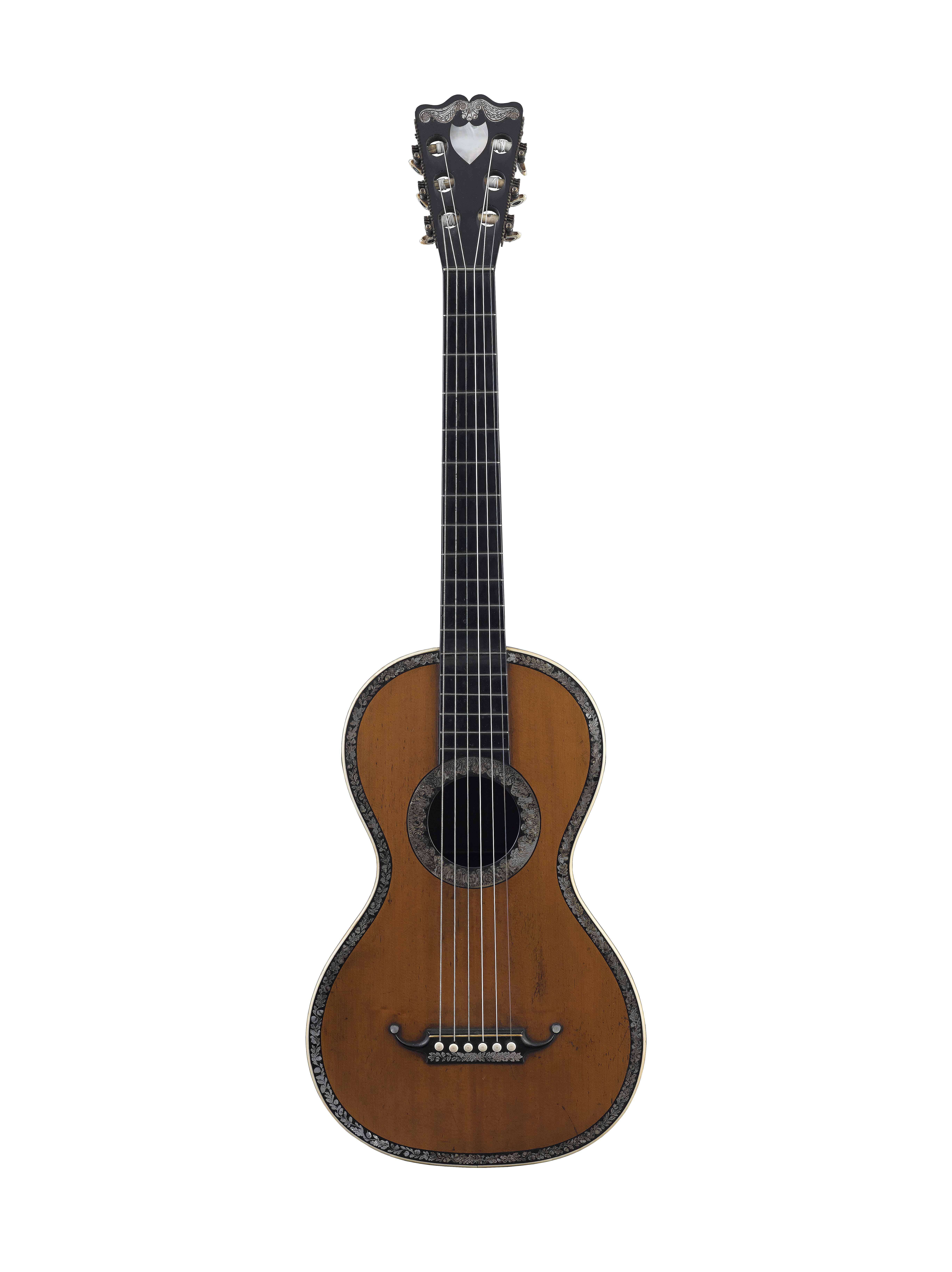

Mid 19th Century Guitar
Plucked instruments produce sound through the vibration of strings plucked by fingers, plectra, or picks. This diverse family of instruments is found across many cultures, encompassing unique constructions, tuning systems, and playing techniques.
The English guitar of the late 18th century, for example, reflects fashionable domestic music-making, while the harp-lute-an early 19th-century London innovation-is reflective of experiments in form and resonance.
From the Italian mandolin to the Russian balalaika, regional traditions shaped instruments whose voices became symbols of identity. The rubab from Afghanistan reveals deep ties between music and spiritual expression, a sonic contrast with the lively auditory presence of Mexico's guitar or Spain's mid 20th-century ukulele.
Together with the banjo, these instruments trace a resonant history: one of exchange, reinvention, and enduring human desire to transform materials-wood, string, and craftsmanship-into music.